Table Of Content
A six-month clinical trial evaluating Core for Women found 80% of people saw better hair growth overall, as well as thicker hair. A trial of the Women’s Balance showed 100% improvement in visible hair growth, 80% less shedding in three months, and 77% thicker hair in six months. Another study found 80% less breakage and thicker hair in people assigned female at birth and 84% more hair scalp coverage in people assigned male at birth. Recent studies have linked the prolonged use of 5mg finasteride and 0.5mg dutasteride to alarming health complications in men, including hyperglycemia and insulin resistance. There is also evidence to suggest that sexual dysfunction is another adverse effect of men taking these medications, according to a 2019 study.
How do trees and green spaces enhance our health?
A plasma-rich injection involves a healthcare professional drawing the person’s blood, separating the platelet-rich plasma from the blood, and injecting it back into the scalp at the affected areas. Doctors use this treatment only when necessary for conditions such as alopecia areata. Alopecia areata results in a person’s hair falling out in random patches.
Harvard Health Publishing
If you notice increased hair loss, you’ll want to make an appointment with a dermatologist or other healthcare professional. They can help determine if you’re experiencing female pattern baldness or a different type of hair loss caused by other factors. Since birth control pills decrease the production of ovarian androgens, they can be used to treat women's androgenetic alopecia. Keep in mind, however, that the same cautions must be followed whether a woman takes contraceptive pills solely to prevent contraception or to treat female pattern baldness. For example, smokers age 35 and older who take the Pill are at higher risk for blood clots and other serious conditions. Hair loss treatment varies based on what caused your hair loss or thinning hair.
Healthline's review
She adds that it also improves blood circulation to the scalp, destroys bacteria that clog hair follicles, and has fewer side effects than minoxidil. Plus, there are other ingredients here that are good for your hair and scalp, including moisturizing olive oil, horsetail extract, and biotin, among others. The company states that the supplements are clinically tested to make sure they’re more effective than placebos — and it shares the results publicly.
The 16 Best Hair Growth Oils of 2024, Tested and Reviewed - PEOPLE
The 16 Best Hair Growth Oils of 2024, Tested and Reviewed.
Posted: Thu, 25 Jan 2024 08:00:00 GMT [source]
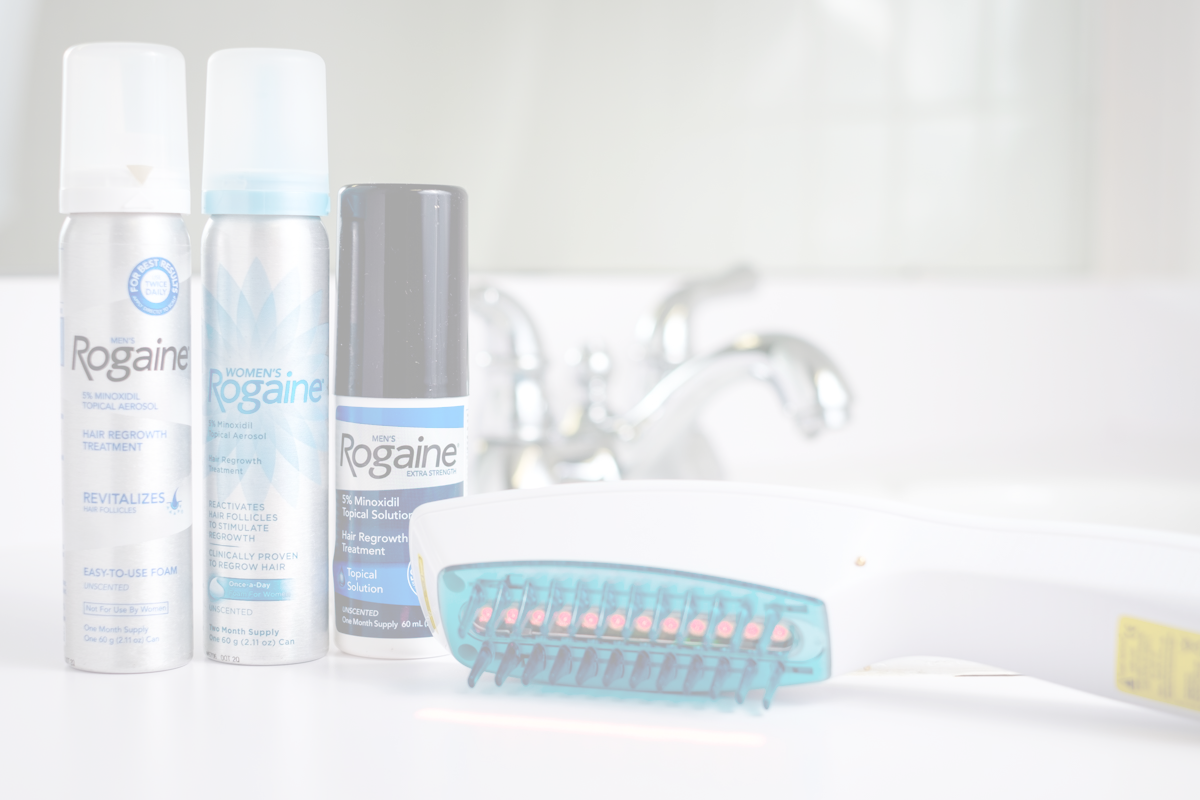
Happy Head can connect you with a licensed physician who will evaluate your situation and determine if you could benefit from a prescription treatment. Happy Head offers prescription strength 8% minoxidil in their topical solutions, which is higher than OTC Rogaine, which contains 5% minoxidil. These ingredients may help volumize, prevent thinning, and soothe a dry, itchy scalp.
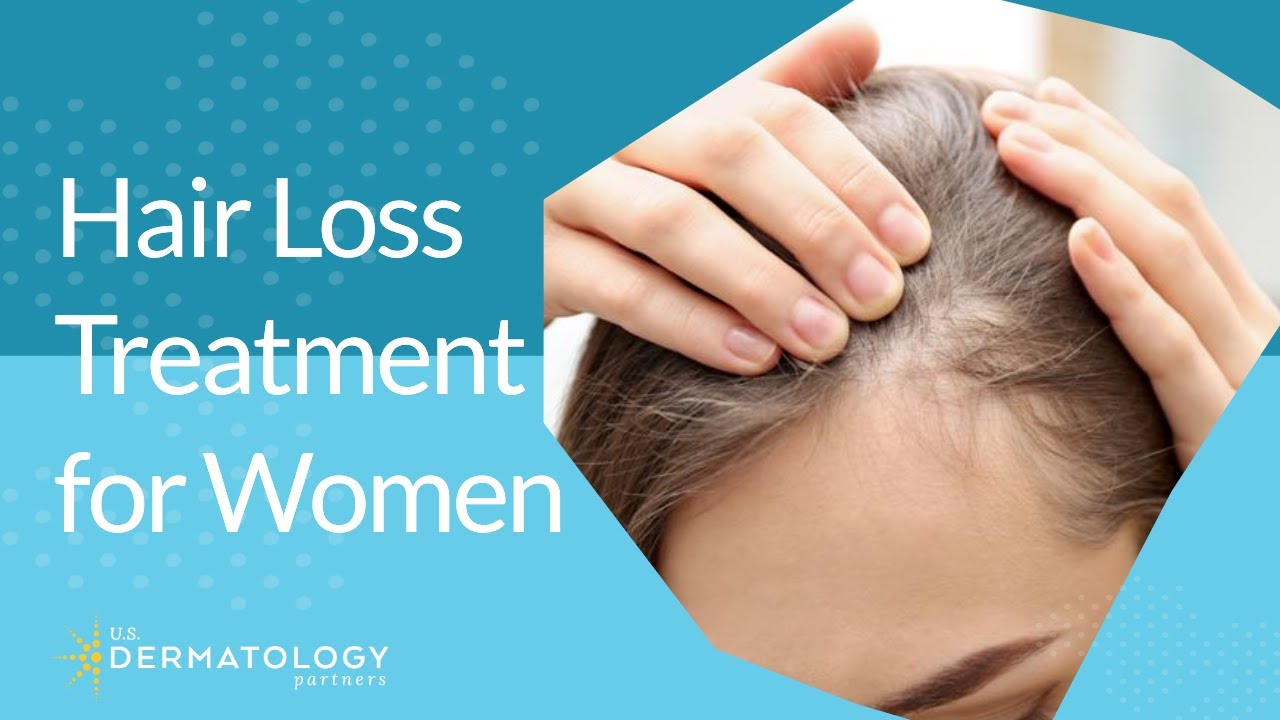
Laser therapy
Both males and females can develop androgenetic alopecia, but they experience it in different ways. Males tend to experience a receding hairline or bald spot on top of their head, while females tend to present different symptoms. Some possible treatments include birth control pills and hormone replacement therapy for either estrogen or progesterone. Some females may experience irritation or an allergic reaction to ingredients in the product, such as alcohol or propylene glycol. Switching formulas or trying different brands may alleviate symptoms. Other supplements meant to help with hair loss tend to contain a lot of one nutrient.
Our 7 Picks For Where To Get The Best Hair Loss Treatments
You can prevent hair loss caused by chemical hair treatments by not using them. You might be able to prevent some hair loss by eating nutritious foods that provide necessary nutrients (like vitamins, minerals and protein) or adding vitamins to your daily routine. It’s important to talk to your healthcare provider before starting any form of treatment for hair loss. Some types of treatment aren’t safe to use if you’re pregnant, planning on becoming pregnant or going through menopause. Hair growth and healthiness are influenced by a number of factors, including nutrition, genetics, medical conditions, hormones and even stress. Research finds that a deficiency in vitamins and minerals important for normal cell growth and function may contribute to hair loss1.
Therefore, physicians often choose topical treatments, which are applied directly to the scalp. During hair loss treatment, avoid using products that can harm your hair, like dyes, chemical relaxers or chemical straighteners. Not using these products can help your hair growth treatment work more effectively. Your healthcare provider will help you choose the type of hair regrowth procedure that fits best with the cause of your hair loss and your hair regrowth goals. The most effective hair loss treatment that works for you might vary from the treatment that works best for someone else.
Sometimes, your hair will regrow on its own, making treatment unnecessary. If your dermatologist suspects that the cause of your hair loss could be a disease, vitamin deficiency, hormone imbalance, or infection, you may need a blood test or scalp biopsy. Here’s how a dermatologist determines the cause and what treatment may involve. A dermatologist is a medical doctor who specializes in treating the skin, hair, and nails. Constant tension or strain on the hair damages the follicle, impacting the ability for blood flow and nutrients to reach it and can ultimately result in permanent hair loss, Dr. Mirmirani explains. Traction alopecia occurs in women whose hair styles or practices consistently put a lot of pressure on the hair (think tight braids or ponytails or extensions).
None of the supplements — except the formula aimed at postpartum people — should be taken if you are pregnant or breastfeeding. These supplements are also not for people who are on blood thinners or other blood medications, are prone to bleeding, or have a blood condition. Find out which companies and products we recommend for a variety of hair regrowth needs. At the end of the day, remember you do have safe and effective options for treating hair loss, and treatment can make a big difference.
Topical tretinoin (Retin-A) is sometimes used in combination with minoxidil to treat androgenic alopecia. In rare cases, ketoconazole shampoo can result in hair loss, so talk with your doctor right away if you notice this side effect. Corticosteroid injections are often used in the treatment of alopecia areata, as they work by modulating immune system activity and lowering inflammation. Generally speaking, the sooner you start treatment, the more options you have and the better your results, dermatologists say. “As soon as you notice hair loss is happening, you should come in,” says Lauren Eckert Ploch, a dermatologist in Aiken, South Carolina. The cost (often thousands of dollars) is prohibitive for most people.
(Many Byrdie editors can relate.) But before you despair, there is good news—finding the right topical treatment for hair loss can be a total game-changer. Whereas FPHL is characterized by gradual, slow hair thinning, telogen effluvium (TE) is defined by a sudden, dramatic shedding that seemingly comes out of nowhere. TE most often occurs after a particularly stressful event such as emotional stress (a break-up, the death of a loved one) or physical stress (surgery, extreme illness), says Dr. Green.
Doctors sometimes prescribe other treatments off-label to reduce the incidence of hair loss in women. Some women may even notice hair growth changes after going off hormonal birth control pills. Hormonal changes of any kind, particularly falling estrogen levels, can temporarily disrupt the hair life cycle. While men tend to notice balding as a receding hairline and specific bald spots, women’s hair loss appears more as overall thinning or a widening of the part at the top of your head.
A review study published in 2022 found that it significantly increases hair diameter and hair count in patients with several types of alopecia. It typically isn’t covered by insurance, and it can be expensive, Mirmirani says. "It starts with thinning of the hair on the crown of the scalp exactly in the center. So women may notice that when they part their hair, the part is a little wider or perhaps it's wispier," says Dr. Davis. "And then what happens is that density just simply decreases over time. And in extreme form, there can be absence of hair on the crown of the scalp." "People think of hair loss or pattern baldness happening only to men," says Dr. Dawn Davis, a Mayo Clinic dermatologist.. Lastly, Hirsch points out that minoxidil has one of the most egregious "pink tax" medications.
Many women will experience some degree of hair loss throughout their lives, and, unfortunately, it's often part of the aging process. Treatments to prevent or stop hair loss, while not perfect, help most women. While not FDA approved, dutasteride is an off-label oral precription medication used to fight hairloss. As with finasteride, it, too was originally developed to treat enlarghed prostates. Hair transplant therapy can be more costly than other treatments and is not suitable for everybody. If hormone imbalances due to menopause, for example, cause hair loss, doctors may recommend some form of hormone therapy to correct them.



No comments:
Post a Comment